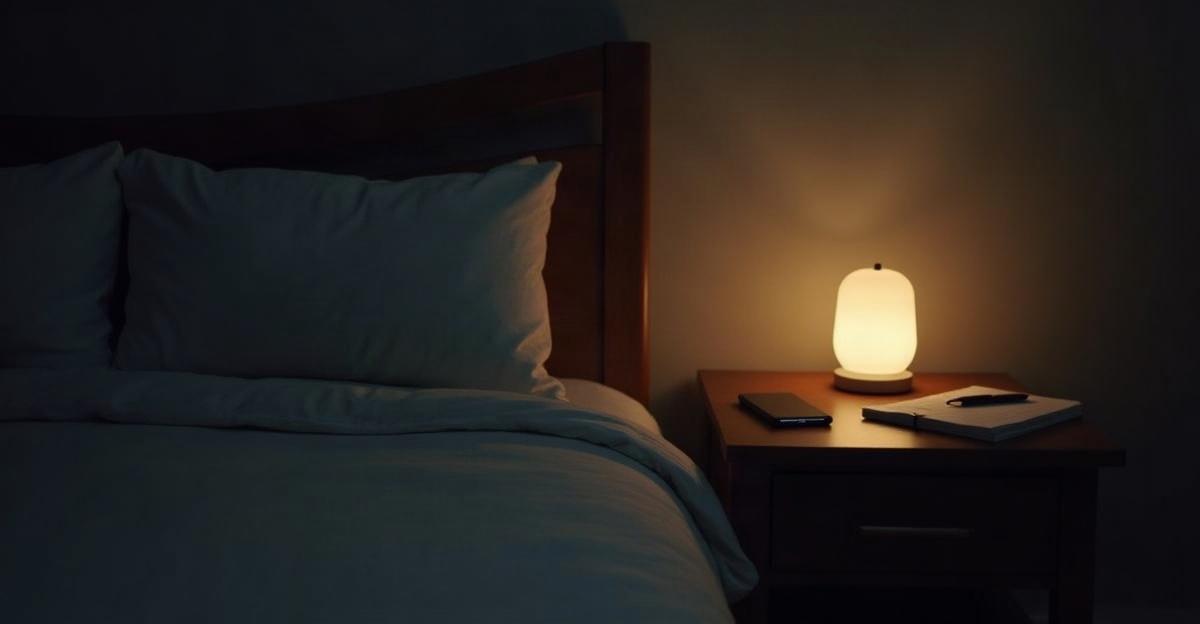
Use one nightly prompt: “What three specific things from today am I glad happened, and why?” Then rotate simple lenses (people, place, body, work, senses) to keep it fresh.
For background on the exercise and why streaks can backfire, see the Three Good Things method.
What’s the best single nightly prompt for gratitude?
Use this every night: “What three specific things from today am I glad happened, and why?” One idea per line; three lines total.
Keep it concrete: from today only, name proper nouns (people, places, tools), add a short “because…”, and stop after 60–120 seconds.
Example entry (3 lines): “Maya’s text—made me laugh about the coffee spill”; “Radiator fixed—flat is warm again”; “Orange light on the walk home—made the street feel calm.”
Another example (3 lines): “Bus driver waited—didn’t miss the connection”; “Leftover curry—no cooking tonight”; “Shoulder felt fine during the school run—no twinge.”
Paper tip: write the prompt at the top of each page. Phone tip: put the prompt in your nightly reminder title so you see it before you type.
Which gratitude journal prompts keep it fresh without adding time?
Rotate simple lenses so the three lines stay varied without slowing you down.
People lens: who you enjoyed, who helped, or a kindness you gave. Examples: “Neighbour lent a socket set—fixed the wobbly chair”; “I checked in on Dad—he sounded lighter.”
Place/Home lens: a spot, route, or detail that made today easier. Examples: “Quiet corner at the café—finished the email”; “South‑facing kitchen—sun while washing up.”
Body/Health lens: movement, energy, sleep, or an absence of symptoms. Examples: “20‑minute walk—cleared my head”; “No headache this afternoon—got the report done.”
Work/Study/Tools lens: a solved snag, a reply, or a tool that helped. Examples: “Ctrl‑F found the spec instantly”; “Colleague’s quick ‘yes’—unblocked the task.”
Nature/Senses (and time) lens: light, weather, sounds, smells; a memory resurfaced or a small anticipation. Examples: “Rain on the skylight—cosy background”; “Fresh basil smell—felt like summer.” If choice slows you, assign lenses to days (Mon People, Tue Work/Study, Wed Body, Thu Place/Home, Fri Nature/Senses, Sat Past, Sun Small anticipations).
What do you write when nothing went right?
On rough days, switch to backups that still fit three lines.
Relief prompt: “What didn’t go wrong today?” Example: “Train delay didn’t make me miss pickup.”
Support prompt: “Who made the load lighter, even slightly?” Example: “Pharmacist explained the dosage—felt less lost.”
Coping prompt: “What helped me cope?” Example: “Set a 10‑minute timer—got the dishes done and felt human.”
Kindness outward: “One thing I did for someone or future‑me.” Example: “Laid out clothes for morning—reduced tomorrow’s scramble.”
Tiny comfort (senses): “One small thing that soothed me.” Example: “Hot shower smell of eucalyptus—reset my mood.”
Should you try longer lists, like 20 or 365 prompts?
Big lists can be motivating, but at 10pm a long list can feel like more decision than you want. For nightly entries, default to the single prompt plus a simple lens.
If you want an occasional stretch, do an optional sprint weekly or monthly: set a 10‑minute timer and list as many specifics from the last 7 days as you can. Don’t edit; circle three to expand tomorrow.
A printed “gratitude journal with prompts” can help you show up, but you don’t need 365 unique questions—repeating lenses keeps it quick and effective.
Recommendation: keep nightly entries to three short lines; use sprints only when you want them.
How do you make this nightly routine stick?
Pair it with something fixed (toothbrushing, the bedside lamp switching off) and keep the journal or phone there.
Set a repeating reminder titled with the prompt (for example, “Three specifics from today, and why”).
Protect the 2‑minute window: keep entries to three lines; if you miss a day, just resume—no catching up.
If you want an app built for one nightly question and three short lines, use Cairn for a gentle reminder and an archive you can revisit.
Cairn
Northlight makes Cairn.
Built for this routine: one nightly question, three short lines, no streaks and no feed. The archive is the point.
Writing your three things every night is free, and so is your archive. Each night Cairn also shows what you wrote a year ago.
A one-time unlock (£2.99 in the UK, no subscription) adds voice entry, full archive search and export, and the widget.
There is no account or sign-up, and the App Store privacy label is Data Not Collected. For where the exercise comes from and how to do it, read the three good things method.